The design of your office space isn’t just about aesthetics—it can directly influence collaboration, productivity, and employee satisfaction. As businesses in Gurgaon and Delhi NCR evolve, understanding which office layout best suits your organization is crucial. From open layouts that encourage teamwork, to hybrid models balancing flexibility, and cubicles providing focused workspaces, each approach has unique advantages and considerations.
In this guide, we’ll explore the most common office layouts, highlight their benefits and challenges, and provide insights to help businesses select spaces that foster efficiency and innovation.
Understanding Office Layouts
Office layouts shape how employees interact, communicate, and perform daily tasks. Choosing the right layout depends on factors like company culture, team size, workflow, and long-term growth plans.
- Open Offices: Characterized by large, open areas with shared desks and minimal partitions.
- Hybrid Offices: Combine elements of open space with private areas or cubicles to balance collaboration and focus.
- Cubicle-Based Offices: Feature partitioned workstations offering privacy and reduced distractions.
Selecting the right office layout requires careful consideration of your business objectives and employee needs.
Open Office Layouts
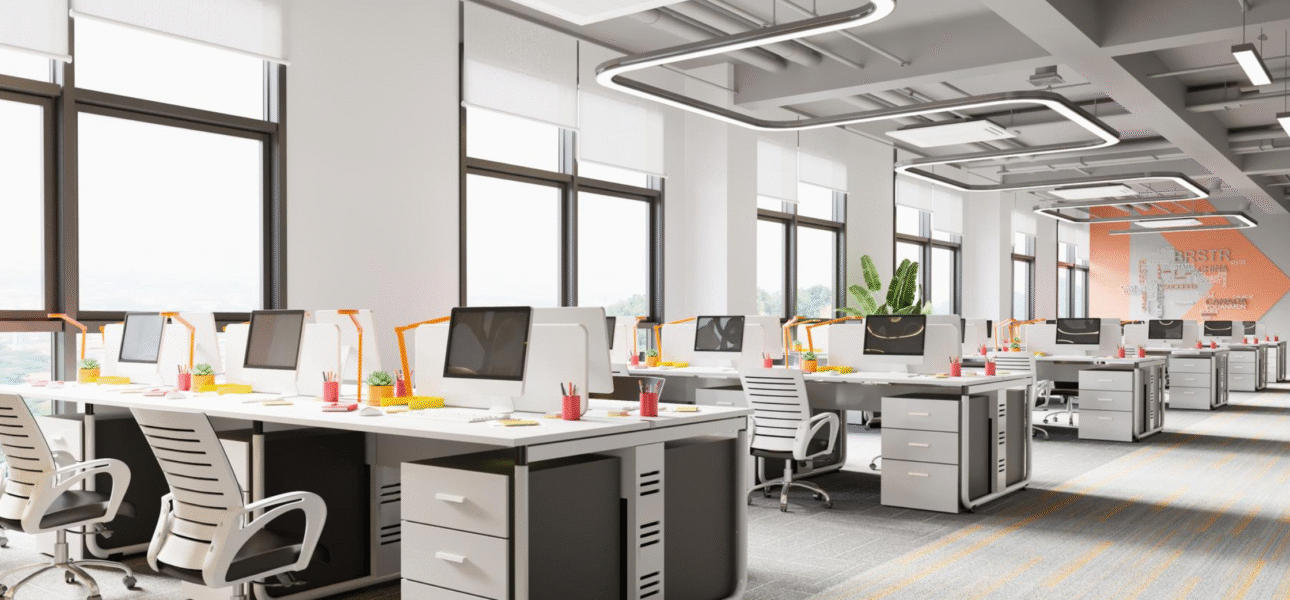
Open office layouts have become increasingly popular in IT and ITES sectors, especially in Gurgaon, due to their collaborative nature.
Advantages:
- Enhanced Communication: Easy for employees to interact, share ideas, and work on projects together.
- Flexible Use of Space: Can accommodate changing team sizes and new hires without major renovations.
- Cost Efficiency: Fewer walls and partitions reduce construction and maintenance costs.
Challenges:
- Noise and Distractions: Open spaces can increase background noise, affecting concentration.
- Lack of Privacy: Employees may find it difficult to have confidential conversations.
- Potential for Burnout: Constant exposure to activity and interruptions may increase stress levels.
Companies in the tech industry often pair open layouts with breakout areas, quiet zones, and collaboration hubs to offset these challenges. For businesses looking to secure office space leasing for IT/ITES in Gurgaon, understanding these factors can guide smarter space selection.
Hybrid Office Layouts
Hybrid layouts are designed for flexibility. They combine open spaces for teamwork with private areas or enclosed offices for focused work. This design has gained popularity as organizations adopt flexible work models and remote-friendly policies.
Advantages:
- Balance of Collaboration and Focus: Teams can engage in group work without sacrificing individual productivity.
- Adaptable Space: Hybrid layouts can evolve as teams grow or work patterns change.
- Support for Remote Work: Private pods and flexible desks allow for occasional in-office presence without overcrowding.
Challenges:
- Complex Planning: Requires careful allocation of open and enclosed areas.
- Higher Costs: Incorporating multiple types of spaces can increase build-out expenses.
- Management of Shared Resources: Hot-desking and booking systems are needed to avoid conflicts.
Organizations seeking office space representation services in Delhi NCR can leverage expert advisors to identify hybrid-ready spaces that align with their operational goals and workforce dynamics.
Cubicle-Based Layouts
Cubicles offer partitioned workstations that provide privacy and a controlled environment. Though once standard, this layout remains relevant for businesses prioritizing concentration and individual tasks.
Advantages:
- Focused Work Environment: Minimizes distractions and allows employees to concentrate.
- Defined Personal Space: Gives employees a sense of ownership and organization.
- Confidentiality: Ideal for handling sensitive data or client communications.
Challenges:
- Reduced Collaboration: Partitions can create barriers to spontaneous interaction.
- Limited Flexibility: Harder to reconfigure for team growth or project-based collaboration.
- Potential Isolation: Employees may feel disconnected from the broader team culture.
For companies exploring cubicle solutions, workspace leasing representation services in Gurgaon can provide tailored advice on space optimization, layout efficiency, and long-term usability.
Choosing the Right Layout for Your Business
Selecting the ideal office layout requires evaluating both business needs and employee expectations. Here are key factors to consider:
- Nature of Work: Collaborative industries like IT/ITES benefit from open or hybrid spaces, while roles requiring high concentration may prefer cubicles.
- Team Size and Growth: Open and hybrid layouts accommodate scaling teams better than traditional cubicles.
- Company Culture: If innovation, collaboration, and transparency are core values, open or hybrid layouts support these ideals.
- Budget and ROI: Consider construction, maintenance, and operational costs, and weigh them against productivity gains.
- Technology Integration: Ensure layouts support seamless connectivity, digital collaboration tools, and ergonomic setups.
Working with office space representation consultants in Gurugram helps companies match their space requirements with functional layouts, ensuring both efficiency and employee satisfaction.
The Role of Tenant Representation
For businesses leasing commercial spaces, partnering with experts can simplify the process and protect long-term interests. Commercial Tenant Advisors in Gurugram and tenant representation services near me offer invaluable support in:
- Negotiating lease terms and rental agreements.
- Evaluating multiple properties for suitability and compliance.
- Providing insights on market trends, space availability, and location benefits.
- Assisting with move-in planning and layout implementation.
Professional tenant representation ensures that your office design aligns with operational needs while maximizing value from leased spaces.
Maximizing Productivity and Satisfaction
Regardless of layout, the ultimate goal is to create a space where employees can thrive. Some strategies include:
- Flexible Zones: Incorporate quiet areas, meeting pods, and social spaces.
- Ergonomic Design: Invest in adjustable furniture, natural lighting, and healthy ventilation.
- Technology Integration: Ensure high-speed internet, collaboration tools, and AV systems support workflows.
- Employee Feedback: Regularly gather input to optimize the space for comfort, productivity, and engagement.
By prioritizing these elements, businesses can create office environments that boost performance, creativity, and morale.
Conclusion: Designing Spaces for the Future
Choosing the right office layout—open, hybrid, or cubicles—requires a thoughtful balance between collaboration, productivity, and employee satisfaction. Whether you are expanding your IT team in Gurgaon, relocating in Delhi NCR, or optimizing current office space, professional guidance is key to making informed decisions.
Real Property serves as a trusted partner, offering expertise in tenant representation, office space optimization, and commercial advisory services. By leveraging their insights, businesses can secure functional, future-ready office spaces that drive growth and foster a positive work environment.